History
A BRIEF HISTORY OF SANKT GEORG AUSTRIAN HIGH SCHOOL

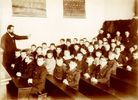
The building complex, which includes St. Georg Church, dates back to the 1300s and gave our school its name. It was purchased under an agreement signed in November 1882 and began serving as a primary school and orphanage for German-speaking Catholic children in its present building. Managed by the Austrian religious congregations of the Lazarists and the Sisters of Charity, the school later added secondary and high school sections and produced its first high school graduates in 1913.
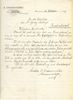

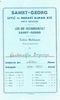
After the First World War, which ended in the defeat of the Central Powers and the collapse of the Austro-Hungarian Empire, St. Georg continued to operate for a time while all other Austrian institutions in Istanbul closed. However, following an order by the French commander, who declared that it was a scandal for a German-language school still to exist in the city, all Austrian staff at St. Georg were forced to leave the country. The school could reopen only after Kemal Atatürk's victory. During the decade following the war, many foreign institutions left Türkiye because of economic problems. St. Georg Austrian High School remained among the few institutions that fully embraced the goals of the Republic founded by Atatürk.
Following Hitler's annexation of Austria in 1938, St. Georg suddenly became a German school. It closed for a second time in 1944 when relations between Germany and Türkiye were severed. Instead of returning to their home country, its staff accepted Türkiye's proposal to spend a year and a half in camps in Anatolia.
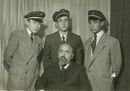

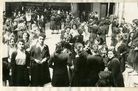
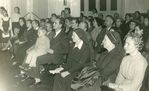


After the war, the school resumed its activities in 1947. As they had thirty years earlier, St. Georg's representatives worked to renew the Austrian education authorities' interest in their work in Türkiye. Over the next thirty years, the school once again developed its identity as the Austrian school in Istanbul. At its peak, more than 1,300 students were taught in the separate girls' and boys' schools by over 40 Austrian teachers funded by Austria. Boarding pupils remained until the 1970s.
St. Georg has been coeducational since 1996. A major reform of the Turkish education system in 1998 introduced eight years of uninterrupted primary education, leading to the closure of the Austrian school's lower secondary section. Consequently, the school no longer offered a preparatory class for eleven-year-olds; a high school preparatory year for fourteen-year-olds was introduced instead. At the same time, a pedagogical decision was taken to reduce class sizes so that German-language learning could continue up to C1 level following the reform.
Over nearly 150 years, much has changed in both society and the school. Yet the understanding at the heart of our institutional vision has remained the same. Today, St. Georg's Founder's Representative and a dedicated teaching staff continue working to preserve the Austrian High School as an institution with an important mission of bringing nations together. In 1982, Austria issued a special stamp for the school's centenary, choosing a bridge as its symbol.
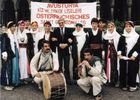
A bridge fulfils its true purpose only when used in both directions. With this in mind, before the school's 125th anniversary celebrations, official representatives also expressed the hope that St. Georg Austrian High School would continue to serve as a bridge and meeting place between cultures and religions.
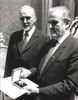
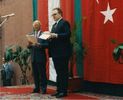
An agreement signed by the Turkish and Austrian foreign ministers in June 2005 described St. Georg Austrian High School as a bridge and a prominent example of cooperation between the peoples of Türkiye and Austria. Both parties committed to making every effort necessary to ensure that the Austrian High School in Istanbul could continue its activities without interruption as a leading foreign private school.
Franz Kangler CM (revised by Alexander Jernej CM in 2026)